
Neuropsychological Evaluations at a Glance
If you’re short on time, here’s the quick overview.
- A neuropsychological evaluation is an in‑depth assessment that examines how the brain processes attention, memory, learning, and behavior.
- It goes far beyond quick ADHD or autism screenings, using standardized cognitive tests to understand why challenges occur.
- These evaluations often assess domains such as executive functioning, working memory, processing speed, attention, and social cognition.
- The goal is not just a diagnosis, but a clear cognitive roadmap that helps guide school supports, workplace accommodations, and treatment planning.
Many adults and parents pursue evaluations after years of unanswered questions about attention, learning, or social functioning.
If you’re wondering whether an evaluation might help clarify your experiences or your child’s, the sections below explain how the process works and what you can expect.
What Is a Neuropsychological Evaluation?
A neuropsychological evaluation is an in‑depth assessment that examines how different parts of the brain influence thinking, attention, memory, and behavior. According to the American Psychological Association, neuropsychology focuses specifically on understanding how brain systems influence behavior and cognitive functioning, which is why structured cognitive testing can reveal patterns that interviews alone may miss. Unlike quick screenings, it measures multiple cognitive domains to understand how a person’s brain processes information.
Many adults and parents arrive at an evaluation after years of wondering why certain things feel harder than they should. You may notice patterns of difficulty organizing tasks, mental exhaustion from focusing, or social misunderstandings but no clear explanation.
A neuropsychological evaluation helps connect those lived experiences with measurable cognitive patterns.
These evaluations are often used to better understand:
- ADHD
- Autism spectrum differences
- Learning challenges
- Executive functioning difficulties
In practice, many clients describe the experience as finally having a map of how their brain works rather than just a list of symptoms.
Mini‑FAQ
What does a neuropsychologist test for?
They assess cognitive processes such as attention, executive functioning, memory, language, and processing speed.
Is a neuropsychological evaluation the same as therapy?
No. The evaluation focuses on assessment and diagnostic clarity, while therapy focuses on treatment and ongoing support.
How Is a Neuropsychological Evaluation Different From a Psychological Screening?
A psychological screening usually involves short questionnaires or interviews designed to identify possible symptoms. A neuropsychological evaluation goes much deeper. It uses standardized testing to measure how specific cognitive systems are functioning.
This deeper process allows clinicians to understand not only whether symptoms exist, but also why certain difficulties occur.
For individuals who have been misdiagnosed or who never quite felt their experiences were fully understood this level of detail can be meaningful.
| Feature | Psychological Screening | Neuropsychological Evaluation |
| Depth | Brief symptom check | Multi‑hour cognitive testing |
| Tools | Questionnaires and interviews | Standardized cognitive batteries |
| Output | Symptom summary | Detailed cognitive profile |
| Purpose | Initial screening | Diagnostic clarity and treatment planning |
In practice, many families seek neuropsychological testing after feeling that previous screenings were too brief or incomplete.
Mini‑FAQ
Why might screenings miss ADHD or autism?
Screenings rely on symptom checklists, which may not capture complex executive functioning patterns.
Are neuropsychological tests more accurate?
They provide more detailed cognitive data, helping clinicians make more precise diagnostic decisions.
Want a clearer, more personalized assessment?
See how a comprehensive evaluation works in detail:
View our full psychological evaluation guide
Signs You or Your Child May Benefit From a Neuropsychological Evaluation
People often pursue neuropsychological testing when challenges with attention, organization, learning, or social understanding continue without clear explanation. This need for clarity has grown as awareness of neurodevelopmental conditions increases. The CDC estimates that 1 in 36 children in the United States are diagnosed with autism spectrum disorder, emphasizing the importance of accurate developmental assessment when concerns arise.
You might recognize patterns like these:
- Chronic disorganization or executive fatigue
- Difficulty sustaining attention despite strong effort
- Learning challenges that do not match intelligence
- Social communication differences
- Previous evaluations that felt incomplete or confusing
Many parents describe a quiet sense that “something deeper is going on” even when earlier screenings did not provide answers.
Similarly, adults often report spending years developing coping strategies before realizing their experiences may reflect ADHD or autism. Research suggests this is common; one major U.S. epidemiological study found that approximately 4.4% of adults meet diagnostic criteria for ADHD, yet many are diagnosed only later in life.
Mini‑FAQ
Can high‑performing adults still have ADHD or autism?
Yes. Many individuals develop strong coping strategies that mask underlying cognitive differences.
Should children be tested if the school already completed an assessment?
Yes, school evaluations are unable to assess and provide mental health diagnostic information. A comprehensive neuropsychological evaluation provides deeper insight into cognitive strengths and challenges.
Not sure if testing is the right next step?
This page can help you decide with more clarity:
Do I need a psychological evaluation?
The Five Cognitive Domains Measured in ADHD & Autism Testing
Neuropsychological evaluations examine several cognitive domains that influence everyday functioning. Understanding these domains helps explain patterns behind attention, learning, and social processing.
Executive Functioning
Executive functioning skills are central to many ADHD and autism evaluations. The National Institute of Mental Health describes executive function as the set of mental processes responsible for planning, organization, decision‑making, and goal‑directed behavior.
Attention and Focus
The ability to sustain attention, shift attention, and manage distractions.
Working Memory
The brain’s ability to temporarily hold and manipulate information.
Processing Speed
How quickly the brain processes and responds to information.
Social Cognition
How individuals interpret emotions, social cues, and communication patterns.
In practice, clinicians often see that challenges rarely occur in isolation. A person might have strong reasoning abilities but experience fatigue when managing multiple tasks or deadlines.
Looking at these domains together helps reveal the unique cognitive profile behind everyday struggles.
Mini‑FAQ
What is executive functioning?
Executive functioning refers to mental skills that help with planning, organization, time management, and impulse control.
Why is social cognition evaluated for autism assessments?
It helps clinicians understand how a person interprets social information and communication signals.
What the Neuropsychological Testing Process Looks Like
A neuropsychological evaluation typically unfolds in several stages designed to create a comprehensive understanding of cognitive functioning.
Although the process may vary slightly between clinics, it often includes:
1. Initial Consultation
A discussion of personal history, current concerns, and goals for testing.
2. Structured Testing Sessions
Standardized cognitive tasks designed to measure different brain functions.
3. Clinical Interpretation
The clinician analyzes patterns across multiple tests and data sources.
4. Feedback Session
Results are explained in clear language, along with recommendations and next steps.
Many clients describe the feedback meeting as the moment when the puzzle pieces begin to fit together.
Mini‑FAQ
How long does neuropsychological testing take?
Testing may take several hours and sometimes occurs across multiple sessions depending on the referral question.
Is testing stressful?
Clinicians typically structure testing sessions to reduce pressure and build comfort, especially for children.
Ready to take the next step?
If you’re looking for clarity sooner rather than later, you can request a consultation here:
Schedule your neuropsychological consultation
Why “The Label” Is Only the Beginning
Receiving a diagnosis such as ADHD or autism can bring clarity. However, the real value of a neuropsychological evaluation lies in the deeper insight it provides.
A diagnosis identifies a pattern. The evaluation explains how that pattern affects thinking, learning, and daily life.
Instead of placing someone in a box, the process often creates a roadmap for support helping, individuals understand their strengths as well as the areas where additional strategies may help.
Many families say the evaluation finally answers a question they have carried for years: “Why has this been so difficult?”
Mini‑FAQ
Will a diagnosis limit opportunities?
For many individuals, understanding their cognitive profile opens access to resources and support.
Why are detailed reports important?
They provide tailored recommendations based on a person’s unique strengths and challenges.
How Neuropsychological Reports Help at School and Work
A comprehensive neuropsychological report often becomes an important document for schools, universities, and workplaces.
These reports provide objective evidence about how cognitive systems function. This information can guide support plans and accommodations when appropriate.
School Supports
- Extended testing time
- Individualized Education Plans (IEPs)
- Learning strategy recommendations
Workplace Supports
- Structured workflow systems
- Executive functioning supports
- ADA‑based accommodations when appropriate
For many individuals, having clear documentation of cognitive differences allows conversations about support to become more constructive and less confusing.
Mini‑FAQ
Are online ADHD tests accepted for accommodations?
Many schools and employers require formal evaluations conducted with validated testing tools.
Can adults use neuropsychological reports at work?
Yes. In some situations, reports can help guide workplace accommodations.
Adult ADHD and Autism Diagnosis in Pennsylvania
Adults can pursue ADHD or autism evaluations at any stage of life. Growing awareness of adult neurodivergence has led more people to explore diagnostic testing later in adulthood. Research published in the American Journal of Psychiatry estimates that millions of U.S. adults live with ADHD, though many were not diagnosed during childhood. Many begin exploring testing after recognizing long‑standing patterns of attention, organization, or social communication differences.
It is not unusual for adults to reach their 30s or 40s before learning that their lifelong experiences may reflect neurodivergent patterns.
In clinical practice, many adults describe feeling both relief and curiosity after beginning the evaluation process. Relief because there may finally be an explanation and curiosity about what their cognitive profile might reveal.
Mini‑FAQ
Is adult ADHD diagnosis common?
Yes. Increasing awareness of executive functioning differences has led many adults to pursue evaluations later in life.
Where can adults receive evaluations in Pennsylvania?
Licensed psychologists and neuropsychologists provide formal neuropsychological assessments.
Choosing the Right Neuropsychological Evaluation Provider
Selecting a qualified evaluator is an important step. Neuropsychological testing requires specialized training and careful interpretation of complex data.
When considering providers, it may help to look for:
- Doctoral‑level clinical training
- Experience with cognitive, achievement, executive functioning, social, and adaptive functioning evaluations
- Use of validated testing tools
- Detailed written reports and feedback sessions
A thoughtful evaluation process helps ensure that the results truly reflect a person’s cognitive strengths and challenges.
Mini‑FAQ
Why does provider expertise matter?
Interpreting cognitive testing requires advanced clinical training and experience.
Should evaluations include teacher or family input?
Yes. Multiple perspectives often provide a more accurate understanding of functioning.
Hospital Waitlists vs Private Neuropsychological Evaluations
Many families begin searching for answers through hospitals or university clinics. These systems provide valuable services, but demand often exceeds available appointments. As a result, waitlists can stretch for months.
For children struggling in school or adults facing workplace difficulties, waiting 6–12 months for clarity can feel overwhelming.
Private neuropsychological practices often provide an alternative path.
| Factor | Large Hospital Systems | Private Neuropsychological Practice |
| Typical Wait Time | 6–12 months or longer | Often weeks rather than months |
| Evaluation Style | Standardized clinical pathway | Highly individualized assessment |
| Report Detail | Structured summary | Comprehensive cognitive profile |
| Accessibility | Insurance networks | Flexible scheduling and consultation |
Many families pursue private evaluations when they need faster diagnostic clarity and a more personalized understanding of cognitive functioning.
Mini‑FAQ
Why are hospital waitlists so long?
Demand for neuropsychological testing has increased significantly, while the number of specialized clinicians remains limited.
Does a private evaluation provide the same type of documentation?
Comprehensive evaluations conducted by licensed psychologists typically produce reports that schools and workplaces recognize for accommodations.
Want faster answers without long waitlists?
You can get started here:
Understanding Neuropsychological Evaluation Costs and Insurance
Neuropsychological testing is a specialized clinical service that requires extensive training, standardized assessment tools, and detailed analysis. Because of this depth, the cost structure can differ from typical therapy sessions.
Some insurance plans provide partial coverage when testing is considered medically necessary, while other plans require out‑of‑network reimbursement.
Many clinics offer consultation calls to help individuals understand coverage options and expected costs before scheduling testing.
Mini‑FAQ
Are neuropsychological evaluations covered by insurance?
Coverage varies widely depending on the insurance plan and the reason for referral.
Why do evaluations sometimes cost more than basic screenings?
Comprehensive evaluations involve multiple hours of testing, scoring, interpretation, and detailed report writing.
About the Evaluator
Neuropsychological evaluations at Open Minds Psychological are led by Dr. Brianna Matey, Psy.D , a licensed clinical psychologist with doctoral‑level training in psychological assessment and cognitive evaluation.
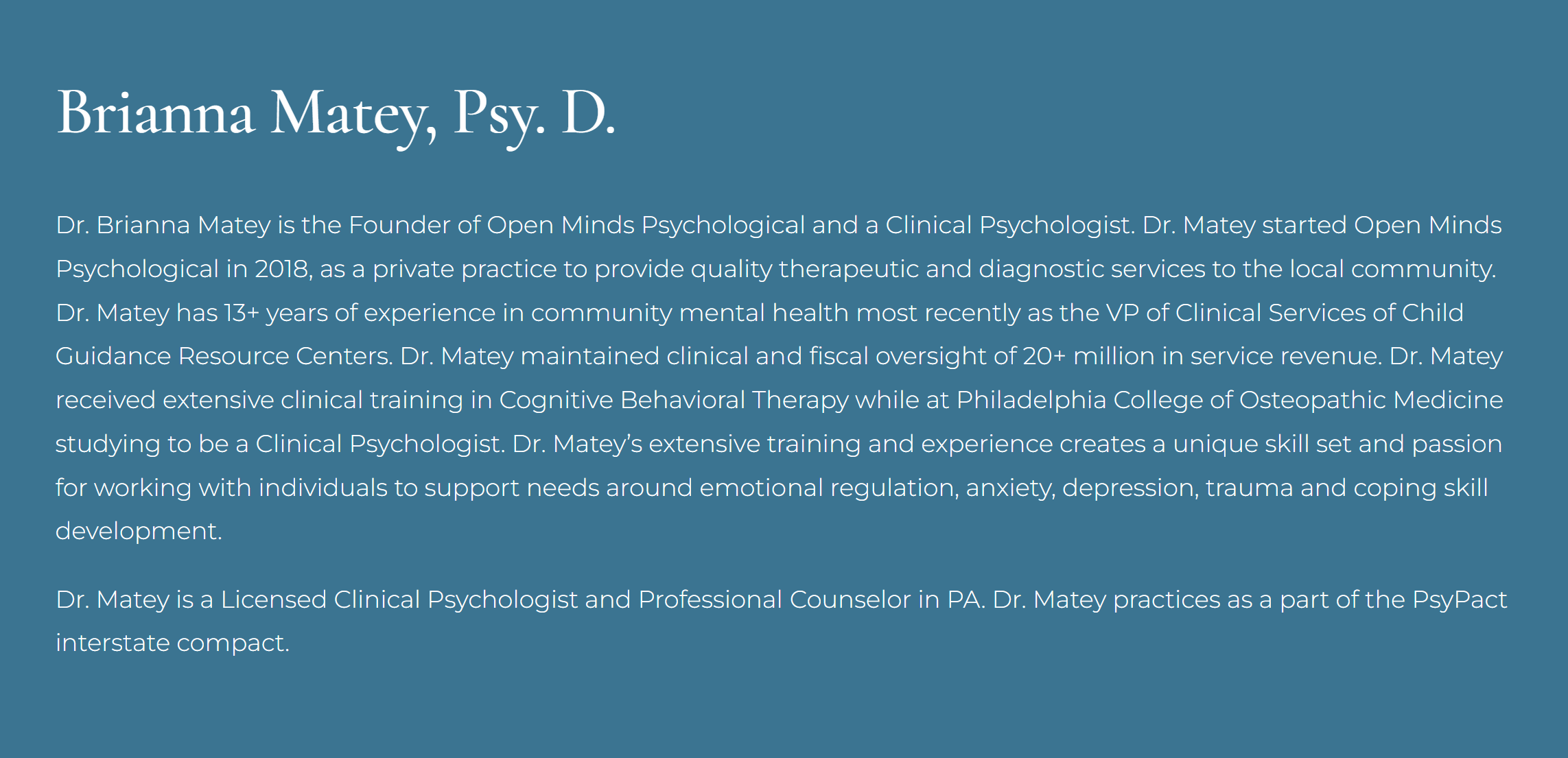
Dr. Matey specializes in diagnostic clarity for ADHD, autism, and executive functioning differences. Her approach emphasizes understanding the full cognitive profile behind a person’s experiences rather than focusing only on surface symptoms.
Clients often appreciate a process that combines clinical rigor with a warm, collaborative approach, helping individuals and families feel understood while navigating complex questions about learning, attention, and neurodivergence.
Frequently Asked Questions
Can adults get tested for ADHD or autism?
Yes. Adults can pursue neuropsychological evaluations to explore lifelong patterns related to attention, executive functioning, or social communication differences.
How long does neuropsychological testing take?
Testing length varies depending on the referral question but often involves several hours of structured cognitive assessments.
Are neuropsychological evaluations covered by insurance?
We our out of network with insurance; however, out-of-network coverage varies by insurance plan. Some policies provide reimbursement for out-of-network evaluations once a superbill is provided.
What happens after the evaluation is complete?
Most evaluations include a feedback session where results and recommendations are explained in clear language.
Do schools accept neuropsychological reports?
Schools often accept comprehensive neuropsychological evaluations when considering academic accommodations.
Ready For The Next Step
Stop wondering and start understanding.
If you or your child are seeking deeper clarity about attention, executive functioning, or social communication patterns, a comprehensive neuropsychological evaluation can help illuminate the path forward.
Schedule a neuropsychological consultation with Dr. Brianna Matey to explore your next steps.