

Key Takeaways
- Insurance coverage for therapy varies by provider, diagnosis, and plan.
- EAPs offer short-term, confidential therapy often without cost.
- If you’re denied coverage, you can appeal or pay out-of-pocket with support.
- Therapy costs range from $65–$125 per session, depending on location and credentials.
- Open Minds offers in-person therapy in PA and virtual sessions in 30+ states.
If you’re considering therapy, you’re probably wondering: “Will my insurance cover it?” It’s a question we hear every day—and one that deserves a clear, honest answer.
At Open Minds Psychological, we believe that cost shouldn’t be a barrier to care. Whether you’re insured through Aetna, exploring your Employee Assistance Program (EAP), or navigating therapy costs without coverage, this guide will help you understand your options, anticipate costs, and feel confident reaching out for support.
We’re a group of compassionate, highly-trained clinicians who understand the emotional and financial weight that often comes with seeking care. Our commitment is to meet you where you are—with transparency, flexibility, and support that feels human.
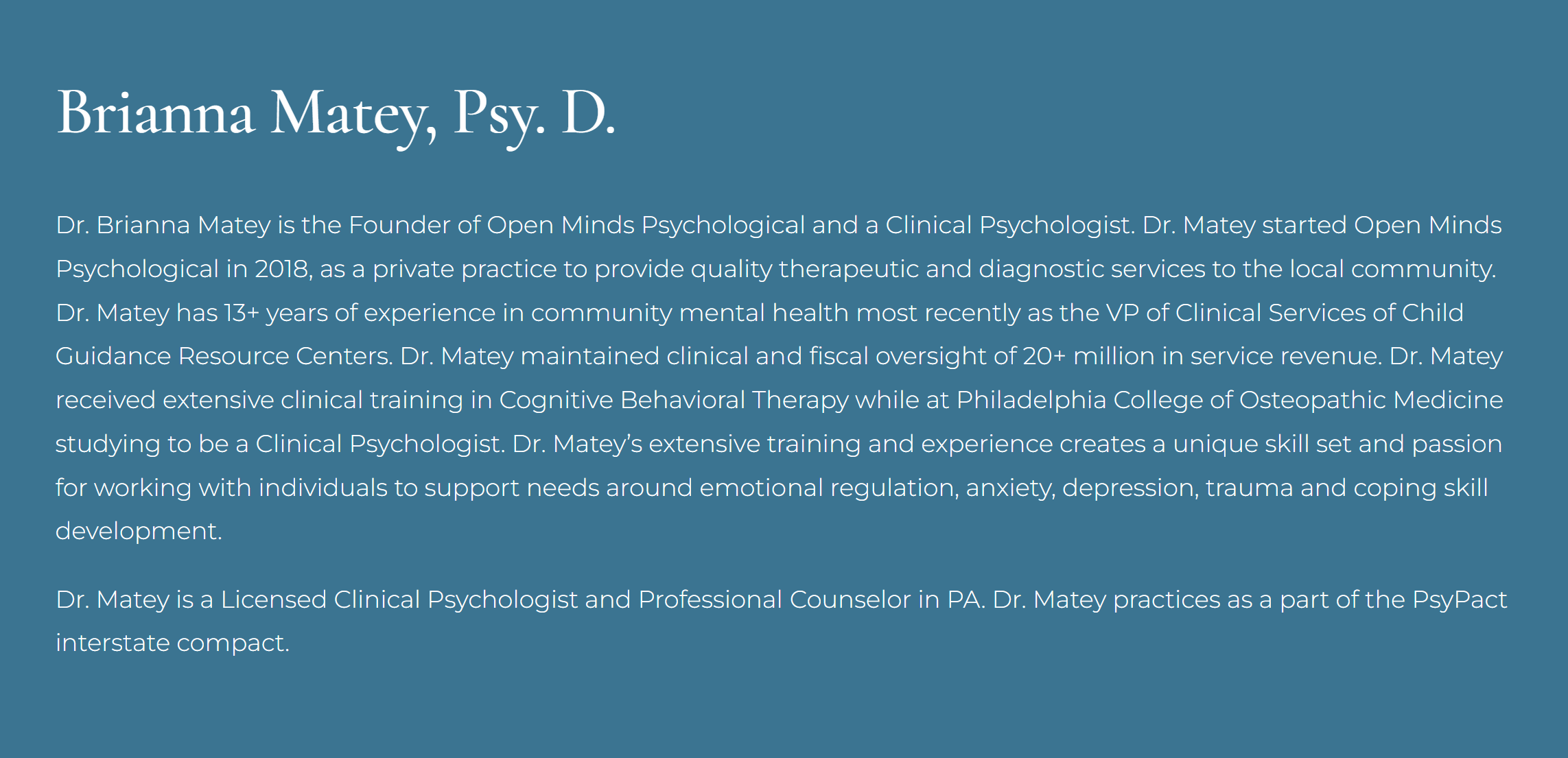
“Insurance can be a helpful tool, but it often comes with confusing limitations. That’s why we take time to walk clients through their options, step-by-step.” — Dr. Brianna Matey, Psy.D., Founder of Open Minds Psychological
How Insurance and Therapy Coverage Usually Work
Understanding your benefits starts with a few key terms:
Key Terms to Know
- Copay: A fixed fee you pay per session, usually $10–$50.
- Deductible: The amount you must pay out-of-pocket each year before insurance kicks in.
- Coinsurance: The percentage you pay after meeting your deductible.
- In-Network: Providers your insurance company has contracted with. Typically cheaper.
- Out-of-Network: Providers not contracted with your insurer. Often higher costs.
In-Network vs. Out-of-Network: What’s the Difference?
In-network therapists typically cost less and require less paperwork. At Open Minds, select clinicians in Phoenixville are in-network with Aetna, and we also accept various EAP programs (more on that soon).
Out-of-network therapists may still be partially covered, depending on your plan. Some clients are reimbursed for part of the cost—but it’s important to check.
Why It’s Hard to Find an In-Network Therapist
Even if your insurance lists dozens of providers, in-network availability can be limited. Many clients face:
- Long wait times (weeks to months)
- Incorrect or outdated directories
- Limited therapist options, especially for specific needs (e.g., trauma, couples)
Part of the problem is insurance denial and claim rejection: for example, in many ACA plans, almost one in five in-network claims were denied in 2023. (KFF.org)
“We’ve seen firsthand how frustrating it is for clients to think they have coverage—only to be turned away or stuck on a months-long waitlist. That’s why we believe in clear communication from the start.” — Christina Slobodian and claim rejection: for example, in many ACA plans, almost one in five in-network claims were denied in 2023. (KFF.org) This can reduce the number of truly available providers even among those listed as “in-network.”
Helpful Laws That Protect You
The Mental Health Parity Act requires insurance plans to treat mental health coverage similarly to physical health coverage. Many plans also comply with the Affordable Care Act, which mandates mental health services as an essential benefit.
That said, enforcement is uneven. Some insurers still impose session limits, require burdensome paperwork, or restrict coverage under vague terms like “not medically necessary.”
Let’s simplify your insurance call.
Get help now →
Employee Assistance Programs (EAPs): What They Are & What They Cover
What is an EAP?
EAPs are employer-sponsored programs that offer free, short-term counseling and support services. They’re confidential, fast to access, and don’t require insurance use.
What’s Typically Included
- 5 to 12 free therapy sessions
- Counseling for stress, grief, family issues, depression
- Referral support if more care is needed
EAP vs. Insurance: When to Use What
Quick Breakdown:
- Use EAP if you want quick, short-term help.
- Use insurance if you need longer-term or diagnosis-based therapy. Use your EAP if:
- You want to talk to someone quickly and confidentially
- You need short-term help with a specific issue
Use your insurance if:
- You need longer-term support
- You’re managing a diagnosis like anxiety, depression, or ADHD
Many Open Minds clinicians are credentialed with Lyra, Spring Health, Health Advocate, and others. We’re happy to help you access your EAP.
We know that the EAP process can sometimes feel rushed or impersonal.
“Whether it’s through an EAP or insurance, we aim to make every session intentional and validating—never rushed.” — Thomas McCabe.
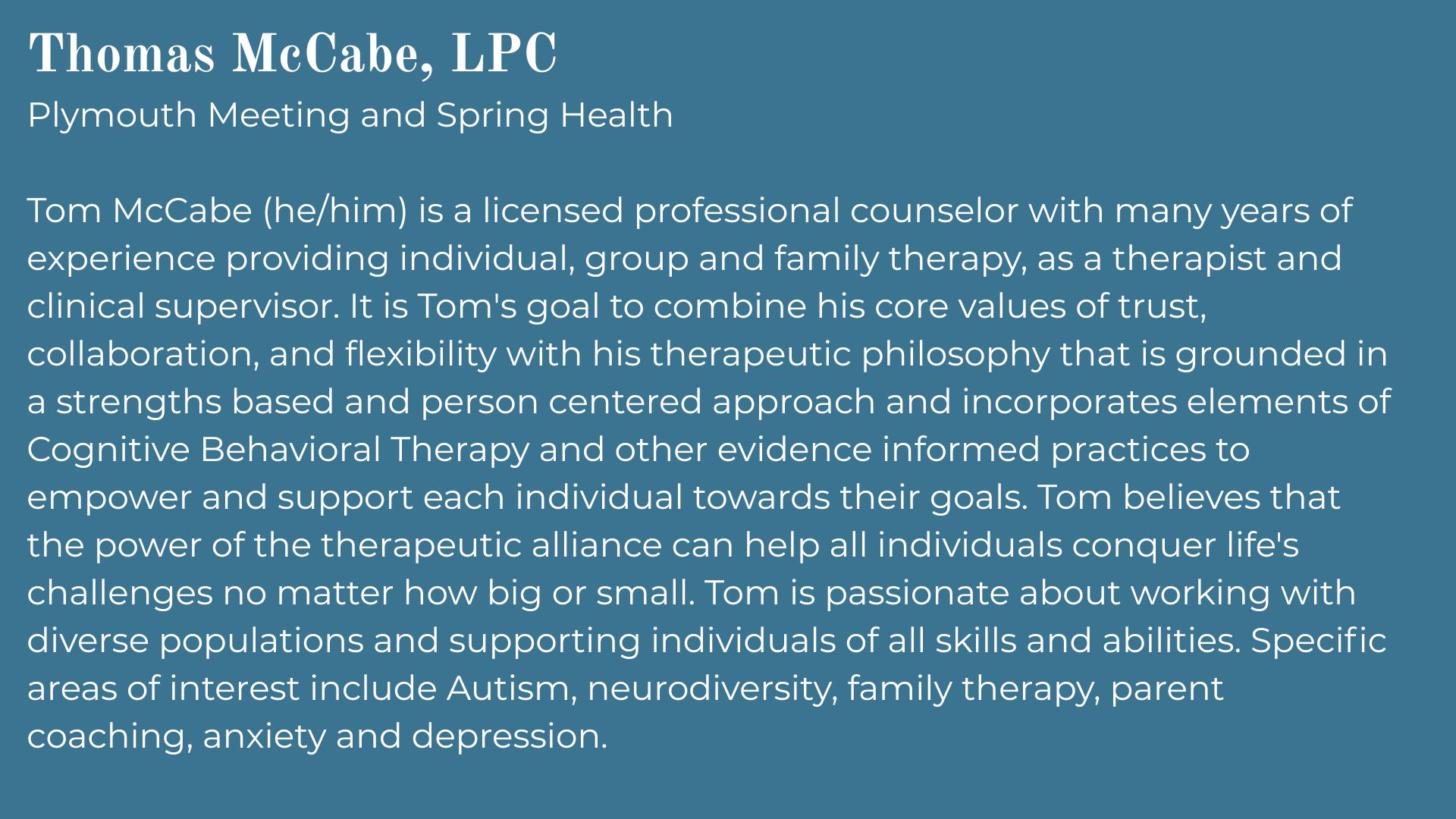
That’s why we’re committed to making every session—whether through EAP or insurance—feel thoughtful, focused, and meaningful.
What Therapy Costs Might Look Like — With or Without Insurance
Insurance-Covered Costs
- Copay: $20–$50 per session (varies)
- Coinsurance: Often 10%–30% of session cost
- Deductibles: If not yet met, you may owe full session fees until it is
Real-Life Example
If your plan has a $1,500 deductible and 20% coinsurance:
- First few sessions: You pay the full rate (e.g. $150/session)
- After hitting the deductible: You may pay only $30 (20% of $150)
Without Insurance
Self-pay rates vary. At Open Minds, we offer personalized quotes based on your needs—and we’ll always provide transparent pricing before you commit.
You may pay $100–$200 per session in PA. To give you some external data: a recent nationwide estimate puts therapy session fees at $100–$250 per session. In Pennsylvania, many providers charge $150–$400, depending on credentials and location. If you’re paying cash (i.e., self-pay) in PA, the average is about $266 per session. (FindOctave, DrAyeshaLudhiani.com, SidecarHealth)
And if affordability is a concern, let’s talk. We believe cost should never be the reason someone goes without care.
Wondering about costs?
Let us walk you through it.
See your insurance options →
How to Find Out If Your Insurance Covers Therapy
Snippet-Friendly Tip:
Call your insurance provider and ask: “Do you cover outpatient mental health services with Open Minds Psychological or my clinician’s name?”
Ask These Questions
- Is mental health therapy covered under my plan?
- What’s my copay or coinsurance?
- Have I met my deductible?
- Do I need pre-authorization?
- What are my out-of-network options using a superbill?
- Do you cover Open Minds Psychological or specific clinicians?
How to Call Your Insurance Provider About Therapy Coverage
Use this quick script when calling your insurer:
- Dial the member services number on the back of your insurance card.
- When prompted, say “mental health benefits” or press the corresponding number.
- Speak to a representative and ask:
- “Is therapy with Open Minds Psychological or [your clinician’s name] covered under my plan?”
- Are out of network benefits using a superbill an option?
- “What’s my copay or coinsurance for outpatient mental health?”
- “Have I met my deductible?”
- “Do I need pre-authorization for therapy?”
- “How many sessions are covered?”
- Write down their answers and the representative’s name and ID (if provided).
- Call us with what you learned—we’ll help you interpret it.
Understanding Medical Necessity & Prior Authorization
Some plans only approve therapy if it’s “medically necessary”—which usually means a formal diagnosis is required. Others ask for prior authorization before you begin therapy. If you’re unsure, ask your insurer or reach out to us. We can help you get clarity.
Need Help Calling Your Insurance?
We’re happy to walk you through it—or even check for you. Our admin team is responsive, knowledgeable, and understands how confusing this process can be.
What If Your Insurance Isn’t Accepted?
No problem. Many clients:
- Use their EAP for initial sessions
- Pay out-of-pocket at a reduced rate
- Submit for out-of-network reimbursement
- Use flexible spending (FSA) or health savings accounts (HSA)
Some therapists don’t accept insurance due to:
- Low reimbursement rates
- Administrative burden or delayed payments
- Preference to focus on care vs. paperwork
We work with you to make therapy affordable—without the pressure, and always with kindness.
What Happens If Insurance Denies Coverage?
Unfortunately, this can happen—but it’s not the end of the road. You can:
- Appeal the decision: Often just requires a letter from your provider.
- Request a review: Ask for an exception based on clinical need.
- Use self-pay or out-of-network benefits as a backup.
It’s more common than you think: among ACA marketplace plans in 2023, approximately 19% of in-network claims were denied. If a provider is out-of-network, the denial rate jumps to about 37%. (KFF.org) Additionally, about 22% of insured adults using mental health services report having a claim denied at least once. (KFF.org)
We can help guide you through the process or suggest alternatives that still fit your needs.
Locations & Telehealth Availability
We provide in-person therapy at:
- Phoenixville Location: Valley Forge Commons, 1220 Valley Forge Road Unit 28, Phoenixville, PA 19460
- Plymouth Meeting Location: 100 W. Germantown Pike, Plymouth Meeting, PA 19462
We also offer virtual therapy across these states:
AL, AR, AZ, CO, DE, DC, GA, ID, IL, IN, KS, KY, MD, ME, MN, MO, NE, NH, NJ, NC, NV, OH, OK, PA, TN, TX, UT, VA, WA, WI, WV
Important Note: Each state has unique telehealth rules. While most insurance plans cover virtual therapy, coverage amounts, licensure reciprocity, and session limits may vary. We’ll clarify this based on your location and plan.
Whether you walk into one of our offices or log in from your home, our goal is the same: make therapy feel approachable, empowering, and truly personalized.
Summary:
- Insurance may cover therapy, but coverage varies.
- Use EAP for short-term, immediate needs.
- Check your copay, deductible, and network status before starting.
- Even if denied, you can appeal or use out-of-pocket options.
- Open Minds helps you understand and maximize your benefits.
<!-- FAQ Schema -->
<script type="application/ld+json">
{
  "@context": "https://schema.org",
  "@type": "FAQPage",
  "mainEntity": [
    {
      "@type": "Question",
      "name": "Does insurance always cover therapy?",
      "acceptedAnswer": {
        "@type": "Answer",
        "text": "Coverage varies by plan. Some require a diagnosis or limit sessions. Check with your provider. We can help clarify your benefits."
      }
    },
    {
      "@type": "Question",
      "name": "How many therapy sessions will insurance cover?",
      "acceptedAnswer": {
        "@type": "Answer",
        "text": "Plans differ. Some offer unlimited sessions; others cap at 12–20 per year. Ask about session caps or pre-authorization."
      }
    },
    {
      "@type": "Question",
      "name": "Will my employer know if I use my EAP?",
      "acceptedAnswer": {
        "@type": "Answer",
        "text": "No. EAP use is confidential and protected. Your employer won't receive details."
      }
    },
    {
      "@type": "Question",
      "name": "Can I use insurance and EAP together?",
      "acceptedAnswer": {
        "@type": "Answer",
        "text": "Yes. Many use their EAP sessions first, then transition into ongoing therapy with insurance."
      }
    },
    {
      "@type": "Question",
      "name": "What happens if my insurance denies a claim?",
      "acceptedAnswer": {
        "@type": "Answer",
        "text": "You have options. You can appeal the decision or choose self-pay or out-of-network benefits. We can help guide you through this process."
      }
    }
  ]
}
</script>
<!-- End Schema -->
Frequently Asked Questions (FAQs)
Does insurance always cover therapy?
Coverage varies by plan. Some require a diagnosis or limit sessions. Check with your provider.
• Coverage may require medical necessity
• We can help clarify your benefits
How many therapy sessions will insurance cover?
Plans differ. Some offer unlimited sessions; others cap at 12–20 per year.
• Check annual limits and co-pays
• Ask about session caps or pre-authorization
Will my employer know if I use my EAP?
No. EAP use is confidential and protected. Your employer won’t receive details.
Can I use insurance and EAP together?
Yes. Many use their EAP sessions first, then transition into ongoing therapy with insurance.
What happens if my insurance denies a claim?
You have options. You can appeal or choose self-pay or out-of-network benefits.
• We can help file appeals or offer flexible payment paths
Ready to Get Started?
If you’re unsure what your plan covers, we’re here to help. At Open Minds Psychological, we’ll walk you through your options so you can focus on what matters most—getting the care you need.
Check your coverage now or schedule your first session.
You’re not alone. Let’s figure this out together.