

When a Psychological Evaluation Makes Sense
- If therapy or medication hasn’t fully helped, testing may clarify what’s missing.
- Ongoing struggles with attention, learning, emotions, or organization often benefit from a formal evaluation.
- Psychological evaluations go beyond questionnaires and provide structured, evidence-based answers.
- Many adults and parents feel relief, not fear, after finally getting diagnostic clarity.
- A thorough evaluation should include testing, a written report, and a clear discussion of next steps.
If you’ve been asking yourself this question quietly or for years you’re not alone.
Many adults and parents come to this point after trying therapy, medication, or quick screenings that didn’t quite explain what’s going on. You may function well on the outside, yet feel like daily life takes more effort than it should. Wondering whether you need a psychological evaluation isn’t overreacting. It’s often a sign that something deserves clearer attention.
This guide is here to help you understand when psychological testing may be helpful, what a quality evaluation actually looks like, and how to move forward with confidence.
What Is a Psychological Evaluation?
A psychological evaluation is a comprehensive assessment conducted by a licensed psychologist to understand how someone thinks, feels, learns, and functions. According to the American Psychological Association (APA), psychological assessments use standardized tools and clinical observation to help arrive at diagnoses and guide treatment planning. It combines clinical interviews, standardized testing, and professional judgment to provide diagnostic clarity and meaningful recommendations.
This process goes far beyond a short questionnaire or intake visit. A thorough evaluation is designed to answer why certain challenges exist, not just name them.
Mini-FAQs
- Is a psychological evaluation the same as therapy? No. Therapy focuses on treatment and support, while evaluations focus on assessment and diagnosis.
- Who conducts a psychological evaluation? Licensed psychologists with specialized training in psychological assessment.
Why People Seek Psychological Testing (And Why It’s Often Delayed)
Many people seek psychological testing after years of feeling misunderstood, misdiagnosed, or stuck in cycles of treatment that don’t fully help. Research published through the National Institutes of Health notes that psychological assessment plays a key role in understanding individual cognitive, emotional, and behavioral functioning beyond surface-level symptoms. Evaluations are often delayed due to access issues, insurance confusion, long waitlists, or being told symptoms are “just anxiety” or “stress.”
In practice, I often see adults who spent years in therapy working hard yet still sensing that something fundamental was being missed. This aligns with broader research showing that adults with ADHD or learning differences are frequently underdiagnosed or misdiagnosed without formal evaluation. Parents frequently describe being reassured that their child would “outgrow” concerns, only to watch those struggles intensify over time.
Key Takeaways
- Long wait times and understaffed systems are common
- Symptoms are frequently misattributed or minimized
- Many people try therapy first without getting diagnostic clarity
Mini-FAQs
- Is it common to wait years for testing? Unfortunately, yes especially for adults.
- Can testing still help if I’ve already been in therapy? Often, yes. Testing can clarify what therapy alone couldn’t.
Ready for clarity now?
If you’re already wondering whether testing could help, you don’t have to figure it out alone.
Start here:
5 Signs It May Be Time for a Psychological Evaluation
If symptoms persist, feel confusing or overlapping, or continue to interfere with daily life despite treatment, a psychological evaluation can help clarify what’s really going on. Population studies estimate adult ADHD prevalence at approximately 3–5%, yet diagnosis rates remain significantly lower, highlighting how often these conditions go unrecognized without thorough assessment.
1. Therapy or Medication Hasn’t Fully Helped
You may have gained insight or coping tools yet something still feels unresolved. This doesn’t mean therapy failed. It may mean that a clearer understanding of underlying factors is needed.
2. You’ve Received Conflicting or Unclear Diagnoses
Many adults describe being told they have anxiety, depression, trauma, or ADHD at different points without a clear explanation of how these fit together. Testing helps sort out overlapping symptoms.
3. Your Difficulties Have Been Present Since Childhood
Longstanding challenges with attention, learning, emotional regulation, or organization often point to neurodevelopmental patterns that deserve closer evaluation.
4. Daily Functioning Feels Harder Than It Should
If work, relationships, or school require constant overexertion just to keep up, that struggle matters even if others don’t see it.
5. You Want Clear Answers, Not More Guessing
Many clients describe relief not fear after testing. Having an explanation can reduce self-blame and help guide more effective next steps.
Mini-FAQs
- Do I need all five signs? No. Even one or two may be enough.
- Can adults be evaluated for ADHD or learning differences? Yes. Adult evaluations are common and often life-changing.
Does This Sound Familiar?
Many people reach this point in the article and realize they’ve been carrying unanswered questions for years.
If you want a clearer picture of what evaluation actually involves — or how it applies to adults, children, or school‑related concerns — these resources can help:
What Happens During a Comprehensive Psychological Evaluation
A quality psychological evaluation includes a detailed intake, standardized testing, careful interpretation, and a written report with clear recommendations. Evidence-based assessment guidelines emphasize the importance of combining clinical interviews with standardized rating scales and multiple data sources to improve diagnostic accuracy. The process should feel thorough, respectful, and collaborative and never rushed.
What the Process Usually Includes
- In-depth clinical interview and history
- Standardized testing sessions
- Scoring, analysis, and diagnostic formulation
- Detailed written report
- Feedback session to review results and next steps
Key Takeaways
- Testing should allow adequate time
- Reports should be clear, accurate, and usable
- Follow-up and explanation are essential
Mini-FAQs
- How long does testing take? Often several hours across multiple sessions.
- Will someone explain my results to me? You should always receive a feedback session.
Psychological Testing vs Therapy: What’s the Difference?
Therapy focuses on treatment and coping, while psychological testing focuses on assessment and diagnostic clarity. Clinical literature consistently distinguishes assessment as a foundational step that can meaningfully inform treatment direction and outcomes. Many people benefit from both just at different stages.
| Therapy | Psychological Evaluation |
| Focuses on support and treatment | Focuses on assessment and diagnosis |
| Ongoing sessions | Time-limited process |
| Helps manage symptoms | Explains why symptoms exist |
Mini-FAQs
- Should I start with therapy or testing? It depends on your goals and history.
- Can testing improve therapy outcomes? Often, yes significantly.
What Happens After Testing? Understanding Results and Next Steps
After testing, you should receive a clear explanation of findings, a written summary, and guidance on treatment options, accommodations, or supports. Good evaluations don’t leave you guessing.
Many clients describe a sense of relief after testing finally understanding why certain things have always felt harder.
Mini-FAQs
- Will testing guarantee medication? No. Medication decisions depend on many factors.
- Can results help with work or school accommodations? Sometimes, yes.
How to Get a Psychological Evaluation Without Feeling Overwhelmed
The best way to start is by contacting a qualified practice, asking clear questions about process, timeline, and cost, and choosing a provider who values communication and thoroughness.
Helpful Questions to Ask
- How long is the wait?
- What does the evaluation include?
- Will I receive a full written report?
- Do you offer telehealth options?
Mini-FAQs
- Do I need a referral? Sometimes, but not always.
- Is telehealth testing an option? Often, yes depending on the evaluation.
Thinking About Next Steps?
If this article helped you recognize your own experience — or your child’s — the next step doesn’t have to be overwhelming.
You can:
Final Thoughts: If You’ve Been Wondering, That Question Matters
Wondering whether you need a psychological evaluation is often a sign that something deserves closer attention. Wanting clarity is not a failure, it’s an act of self-understanding.
If you’re ready for answers that feel thorough, validating, and useful, a comprehensive evaluation can be an important next step.
About the Author
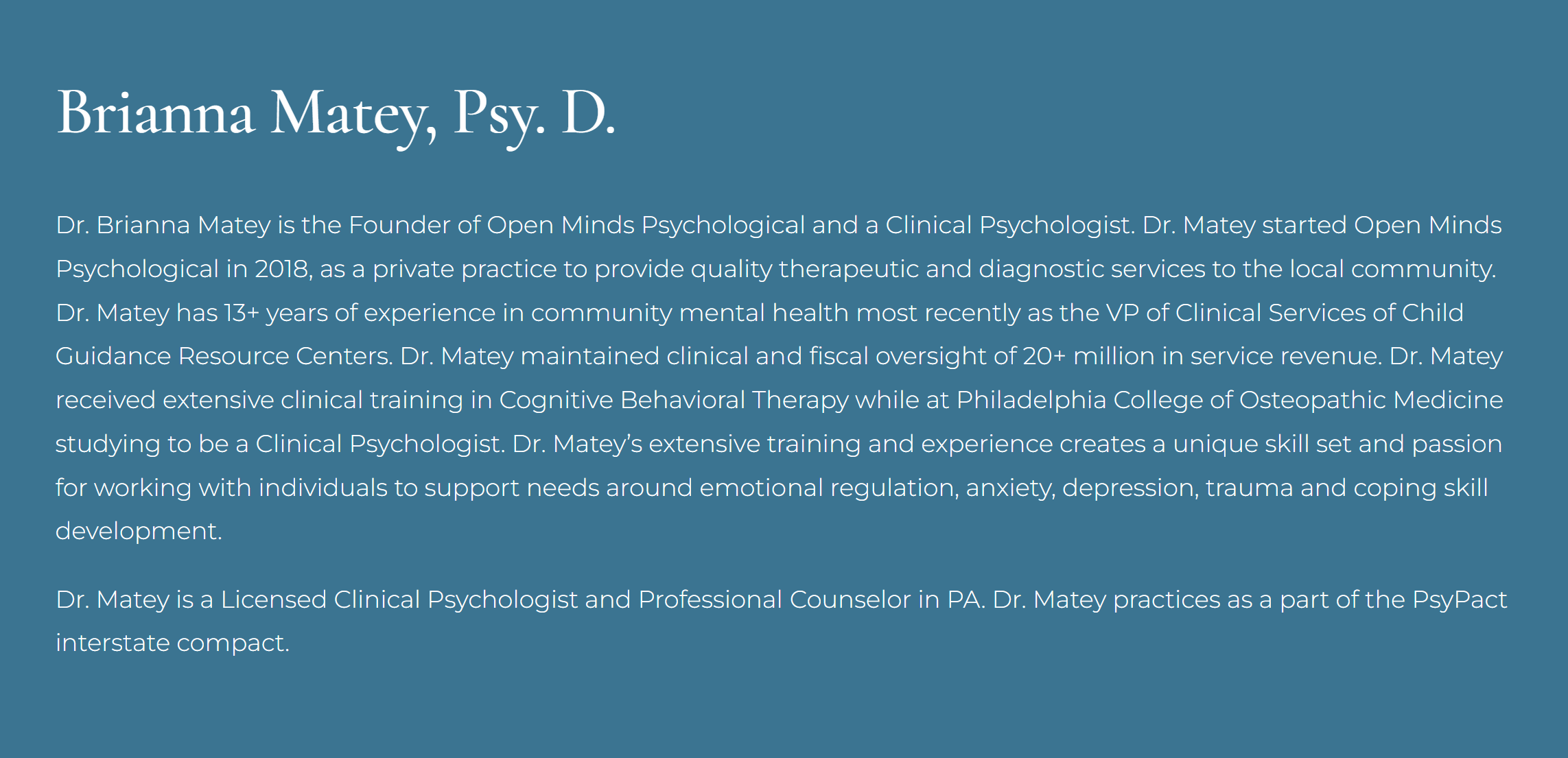
Dr. Brianna Matey, Psy.D., is the founder of Open Minds Psychological. She is a licensed psychologist with advanced training in psychological assessment and a clinical approach grounded in compassion, clarity, and evidence-based care. Her work focuses on helping adults, children, and families gain meaningful understanding not just diagnoses so they can move forward with confidence.
FAQ
How do I know if I really need psychological testing?
If symptoms persist despite therapy, feel confusing or overlapping, or interfere with daily life, testing can help clarify what’s going on and guide more effective next steps.
Is a psychological evaluation worth the cost?
Many people find that clarity saves time, money, and emotional strain in the long run by reducing trial-and-error treatment.
Can I get evaluated as an adult?
Yes. Adult evaluations for ADHD, learning differences, and mental health concerns are common and valid.
What if my insurance doesn’t cover testing?
We will review costs up front and or documentation for reimbursement by your insurer if applicable. We will review the costs up front.
Will testing label me permanently?
A diagnosis is a tool for understanding, not a definition of who you are.
Getting Clear, Supportive Answers
If you’re ready for clarity not guesswork, a comprehensive psychological evaluation can help you understand what’s been making things harder and what might actually help next.
Schedule a consultation to learn whether a psychological evaluation is right for you, what the process would look like, and how to move forward with confidence.